


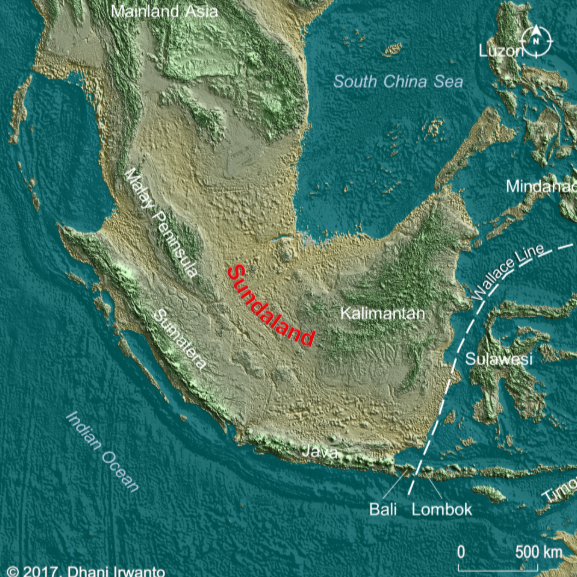
In Northwest Europe, Doggerland connects Great Britain to mainland Europe. But as we go down to Southeast Asia, we discover that there is also a vast prehistoric landmass, Sundaland, connecting mainland Asia to several major islands. Sundaland was once home to diverse wildlife and ancient human species like Homo erectus, being one of the biologically richest hotspots on Earth. It connected the Indochina (modern-day Cambodia, Laos, Thailand, Vietnam) and Malay Peninsulas to the major islands of Sumatra, Borneo, Java, and Palawan. It existed during the Pleistocene Epoch, when sea levels dropped by about 120 meters during the Last Glacial Maximum, about 20,000 years ago, exposing the Sunda Shelf and creating Sundaland. However, rising sea levels began to flood the region, with the process concluding at roughly 5,000 BC, when it finalized the archipelago geography we see today
Categories:
Ancient Geography: The Mystery of Sundaland
May 20, 2026
More to Discover



About the Contributor
Lee Meh, Staff-Writer
Hi, my name is Lee, and as of 2025-26, I am a senior at Page High School. Before coming to Journalism, I was simply a reader who likes to read interesting books while listening to music. I think taking Journalism will help improve my writing skills.