


DNA has always been an important part of our bodies. It is the fundamental molecule carrying genetic instructions required for organisms to develop and function, passed down from parents to offspring for generations. But we hadn’t always known about the molecule.
In 1869, a Swiss biochemist named Friedrich Miescher, who was studying white blood cells, discovered DNA, which he called “nuclein”. It was later identified as a “nucleic acid” by Albrecht Kossel, who later isolated and identified the five nucleotide bases (adenine, cytosine, guanine, thymine, and uracil), thereby giving it its present name, deoxyribonucleic acid.
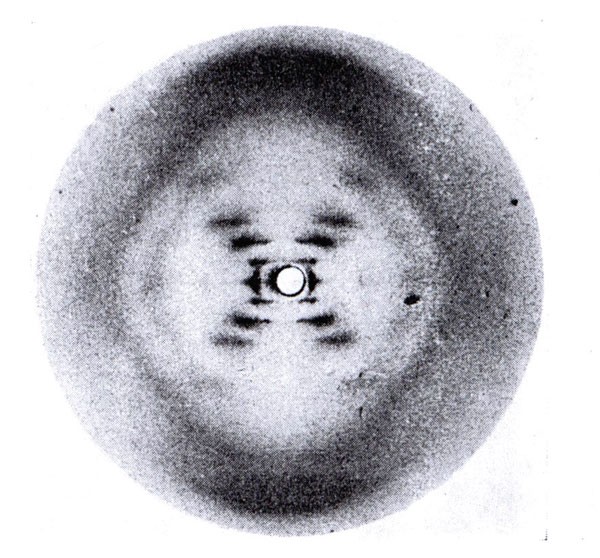
In 1952, Rosalind Franklin contributed by capturing “Photo 51”, which showed the helical structure of DNA, becoming a crucial yet unauthorized piece of data for the later discovery of the double helix structure.
Finally, on February 28, 1953, the double helix structure of DNA was discovered by James Watson and Francis Crick at Cambridge University, with their findings formally published in April of 1953 in the scientific journal Nature. Watson, Crick, and Maurice Wilkins (who’d shared Franklin’s data without her knowledge) later won a Nobel Prize in 1962.