

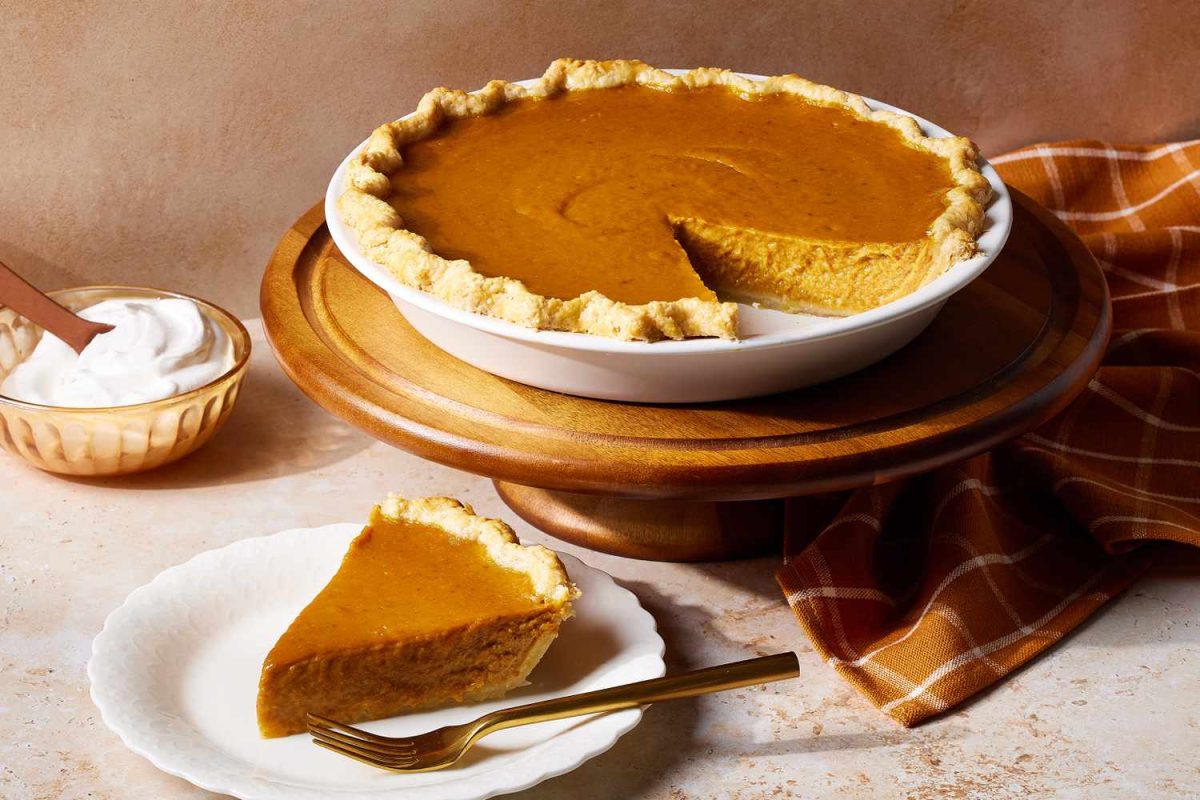
Pumpkin pie has always been a staple in Thanksgiving dinners around the US, but have you ever thought about where they come from and why we eat them on Thanksgiving?
Pumpkins were one of the earlier exports of the New World, first appearing in England in 1536 and given the name Pompion due to its round shape. The pumpkin quickly was utilized for dishes such as stews and soups, and some early versions of the illustrious pumpkin pie. It is likely that some passengers of the Mayflower were familiar with pumpkins as the Wampanoag and how to utilize them in recipes; however, the pumpkin pie at the original Thanksgiving was likely much different than modern pies. Likely using a hollowed-out pumpkin filled with the remaining pumpkin giving it a more soup-like appearance.
The first published mention of a pumpkin pie using traditional pie crust that is intact today is Hannah Woolleys 1670 publication of ¨Gentlewoman’s Companion¨ which used alternating layers of apple and pumpkin filling.
Pumpkin pies have been associated with abolitionism due to it being a popular dish in New England where most Abolitionists lived it was incorporated into many abolitionist poems and novels.
After the Civil War and Lincolns declaration of Thanksgiving, pumpkin pies reach extended far beyond the borders of New England with help from magazines and recipes. In 1929 Libbys Meat Canning Company produced a canned version of the pumpkin filling allowing many to create the pies without as much effort.
In short, the pumpkin pie is a dish that has significant ties to American history and tradition and will most likely continue to be a popular dish for the decades to come.