

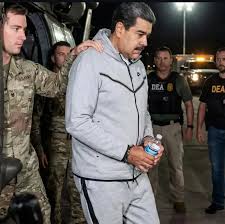
U.S. President Donald Trump said on Saturday he was putting Venezuela under temporary American control after the United States captured President Nicolas Maduro in an audacious raid and whisked him to New York to face drug-trafficking charges. “We will run the country until we can do a safe, proper, and judicious transition,” Trump said during a press conference at his Mar-a-Lago resort in Florida. “We can’t take a chance that someone else takes over Venezuela who doesn’t have the interests of Venezuelans in mind.”
Trump said as part of the takeover, major U.S. oil companies would move into Venezuela, which has the world’s largest oil reserves, and refurbish badly degraded oil infrastructure, a process experts said could take years. Critics said his focus on oil at the press conference raised questions about his administration’s efforts to frame the capture of Maduro and a series of deadly missile attacks on alleged drug boats as a law enforcement operation aimed at choking off drug shipments to the U.S. As part of the dramatic overnight operation that knocked out electricity in parts of Caracas and included strikes on military installations, U.S. Special Forces captured Maduro in or near one of his safe houses, Trump said.
A U.S. occupation “won’t cost us a penny” because the United States would be reimbursed from the “money coming out of the ground,” Trump said, referring to Venezuela’s oil reserves, a subject he returned to repeatedly during Saturday’s press conference.
The idea that a country’s oil reserves can pay for an American invasion also recalls the 2003 Iraq war. In the run-up to the invasion, U.S. officials repeatedly stated that the cost would largely be covered by Iraq’s assets, including its oil. Various estimates by academics say the actual cost to the United States of its years-long entanglement in Iraq ended up being at least $2 trillion.
Trump’s focus on foreign affairs provides fuel for Democrats to criticize him ahead of midterm congressional elections in November, when control of both houses of Congress is at stake. Republicans control both chambers by narrow margins.