


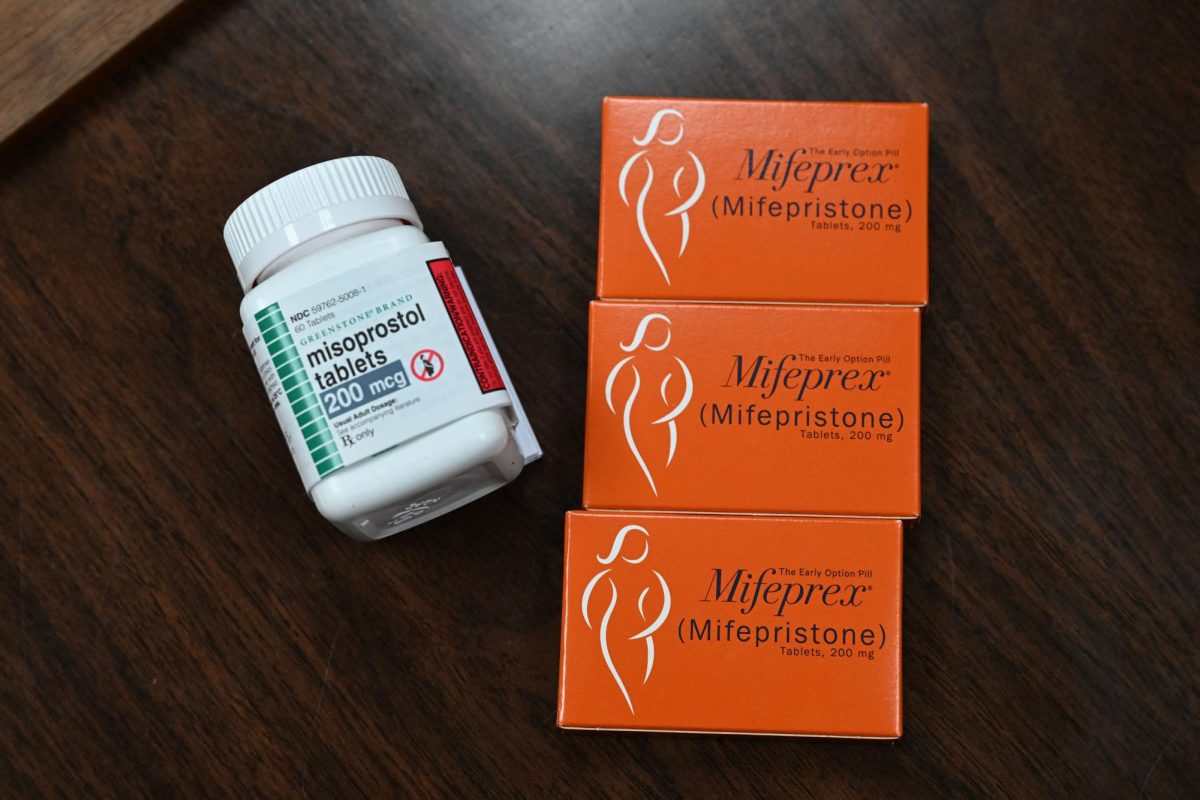
On Friday, a panel of federal appeals court judges changed the rules for a medicine called mifepristone. For more than two decades, mifepristone has been used with another drug, misoprostol, for most medication abortions in the U.S. The Food and Drug Administration, under President Joe Biden, relaxed prescribing rules for mifepristone. That allowed doctors to prescribe the two-drug regimen over the phone or online. The medicines could be mailed or picked up at pharmacies and taken at home to end pregnancy up to 10 weeks of gestation.
Last Friday’s court order said that the FDA has to go back to its earlier in-person prescribing rules for mifepristone. The order immediately applies to the whole country. The makers of Mifepristone have appealed to the Supreme Court, asking for a quick reversal to the Biden-era rules while the case continues. In an earlier case involving Mifepristone, the high court did just that. Something similar may happen again — or not.
Most medication abortions in the U.S. have used both mifepristone and misoprostol because patients experience fewer side effects when the medications are combined. A regimen involving both medications is also used for miscarriages. But misoprostol alone can be used effectively for abortions — and is commonly prescribed in some countries. A grassroots effort among women in Brazil, Argentina, and other South American countries in the late 1980s and early 1990s spread word that the medicine originally on the market as an ulcer treatment could be used to end unwanted pregnancies. Patients in states that have banned or heavily restricted abortion have been able to access telehealth medication abortion, and this is at the heart of the case Louisiana brought against the FDA. No medication abortions are available legally in states that have banned abortion. But some organizations have been helping women in those states access pills. Abortionfinder.org keeps an up-to-date list of services that help people access abortion, and includes state-by-state legal information.
The Miscarriage and Abortion Hotline offers free consultations with clinicians if a patient has follow-up questions about a medication abortion, even if she had the abortion in a state where it’s illegal.