

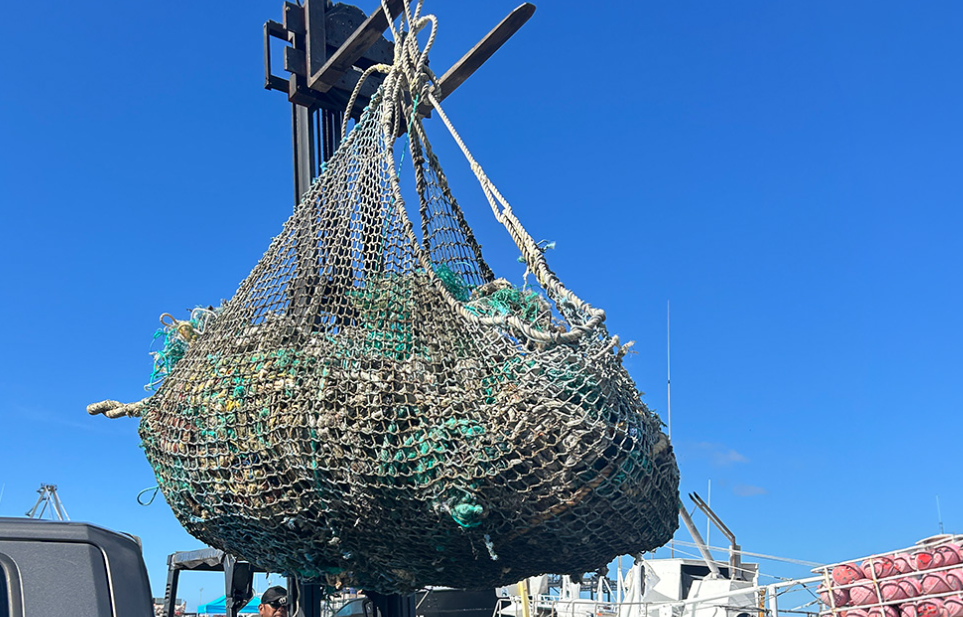
The Great Pacific garbage patch is a mass of trash that spans 617,000 square miles (twice the size of the state of Texas) and includes waste from microplastics to fishing crates. This mass of garbage is 1 of the largest examples of the human impact on our planet.
This large mass of marine trash is primarily made up of microplastics with most of the weight in abandoned fishing gear. The trash gathers here and in many more places of similar geography in the middle of the ocean because the ocean currents called gyres, spread across the ocean and are what move warm water to the poles or cool water to the equator. These currents also pick up the trash that falls into the ocean and eventually drop off the trash in the center of their circles which is where the Great Pacific Garbage Patch is located.
The Bounty Project was started by Hawaii State’s Center of Marine Debris Research. The project used the fisherman that may have been the cause of such a large buildup, and gave them financial incentives to remove large fishing gear from the sea with compensation being distributed. As it started in 2022, NOAA has matched all of the spending that the organization has provided so that the spending can have more of an effect. As of now, they have extracted over 185,000lbs of trash and are still going to do their part in lessening the Great Pacific Garbage Patch.
The best thing that you can do to help lessen the patch is by recycling. Most of the materials that are contained in the sea mass are made of materials that can be recycled like water bottles. Even the microplastics are types that could have been recycled at one point but now collect to make a large area of the ocean almost uninhabitable for many species.