
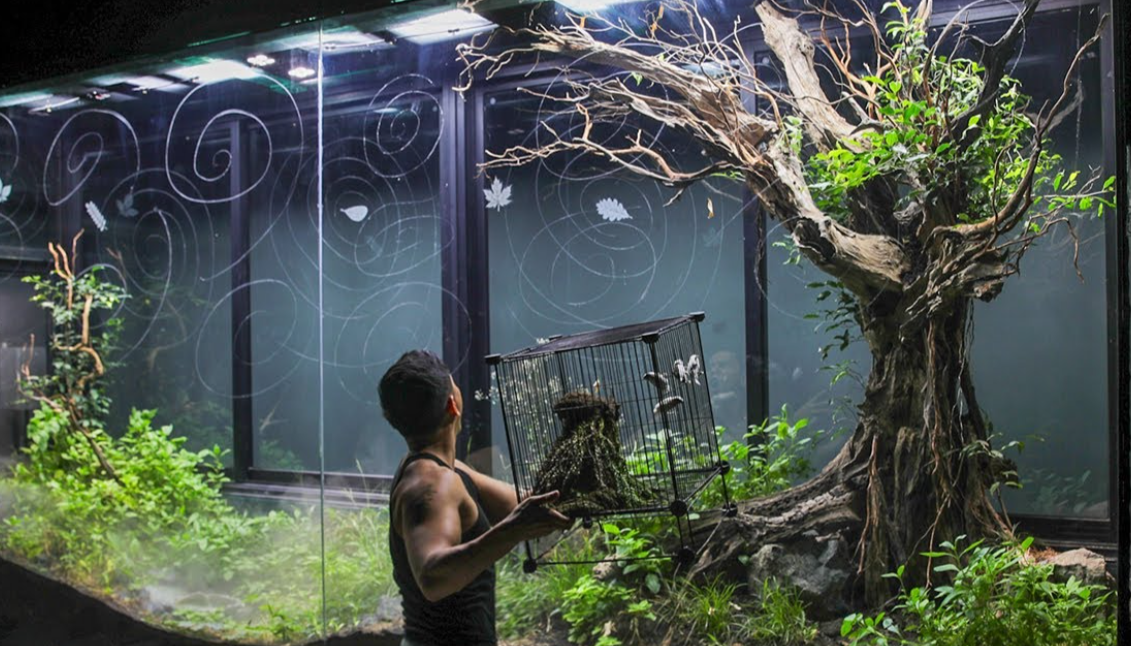
Located at a private residence in the Philippines, there is a several thousand gallon network of tanks that host a biodiverse group of wildlife that are born in, die, hunt, and survive in reside. The entire journey, which is still continuing, is being fully recorded and documented on YouTube.
Michael Bustos has had quite a journey as a Phillipine-Canadian. His parents were Filipino migrants to Canada. Some of his early jobs included a grueling industrial job, radio talk show host, and a small music career until he was able to finally break through the entertainment industry. As a finalist in the Canadian Idol show in its inaugural 2003 season, he finally got this chance. He started a successful music career and Filipino comedy career which allowed him to move to the Philippines and have a very different life than the one that he had before. Something that helped him in these times was his small ant farming hobby that he grew through a YouTube channel called antscanada.
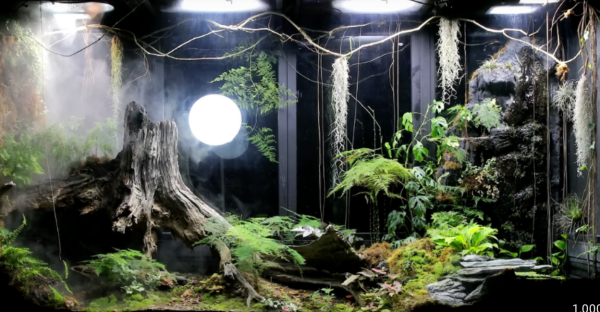
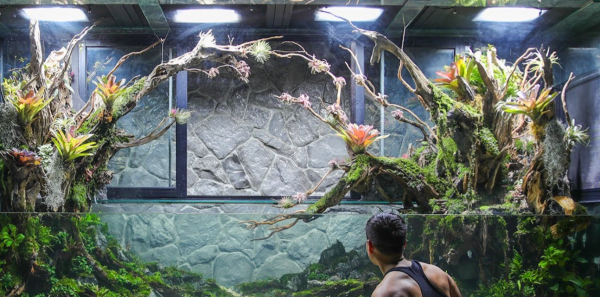
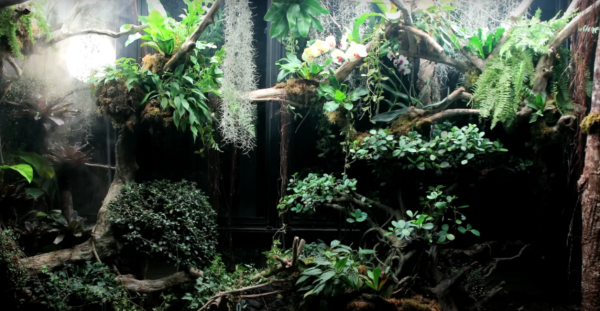
His ecosystem vivarium series starts with his initial vivarium that he called Pantdora. This was based on a cloud rainforest floor. The main focal point is a large treestump that he found and decided to repurpose for the ecosystem. Fog rolls through this area often and it can even rain in the tank. Next came Orchadia which connects to the floor above through a glass bridge. Animals can get up there through some branches that hang down. This tank is based off of the same cloud rainforest but rather its canopy with it having small trees and a lot of branches. After Orchadia came Hydromeda which is based on a swampland. This one has the whole lower part of it filled with water with a few collections of logs and branches to act as islands. This tank is connected to Pantdora through a cave themed tunnel bridge. The most recent vivarium is Verdantia, themed off of a plateau grassland, which connects on the upper floor to Orchadia through a log themed bridge. That bridge also has a hive of stingless bees native to his area that are free to move outside to bring in more nutrients and allow the occasional new animal moving in though it is a hazardous way to move in.
There are many types of aquatic and terrestrial plants that inhabit these areas. There are grasses, trees, ferns, flowering plants, and various small aquatic plants to name a few. Fungi and lichen also grow within the miraculous creation. There is even a species of termite that farms a fungi which has never been done in captivity before and he hopes to find out how to do so.
With all of these plants, animals can be introduced into the vivarium. There have been many helpful creatures brought in like a gliding draco lizard, native marauder ants, and crickets which have helped improve biodiversity and allow no one species to have too much power and no limitations. There have also been some bad additions like the invasive crazy ants which will do anything to kill off any competing groups and take nutrients away from the native species. They have caused several ant extinctions like the original marauder ants and the weaver ants. Bustos has decided to not interfere with these species and allows nature to run its course unless it is threatening an entire ecosystem collapse like with the crazy ants on a few occasions.
There are quite a few reptiles and amphibians that have lived and do live in the vivarium. The draco lizard stated before and the bronzeback tree snake went extinct but others have run their course through the tanks and have been set free or moved elsewhere like the banded bullfrog, sunskink, and spectacled caiman. Many still live in the ecosystem and thrive like the house gecko, golden tree frog, green tree python, and strawberry pacman frog which all fill vital roles on the food chain and act as good predators and prey to the animals within.
With these reptiles has also come a few attempts at warm blooded birds and mammals. Success has been found after a while with birds. The ecosystem holds a mating pair of ground based king quails that have settled into the grassland with the society finches that fly around the 2,000 gallon grassland tank. There were also mammals with the small sugar gliders that acted as massive predators. They had to be removed for causing an ecosystem collapse that caused 2 extinctions that killed off all of the larger prey insects 2 times.
In the waters of the swampland there are several aquatic species. There are some fish with diverse species of tetras, corydoras, and catfish. There are other aquatic animals like mixed snail species, cherry shrimp, amano shrimp, and the occasional tadpoles from the breeding frogs.